
The Indian manufacturing sector has the potential to emerge as the global hub, especially on account of its skilled manpower, advanced technology and software expertise.

Growth in export orders also eased marginally at the end of 2010, after registering a record rise in the previous month. However, the growth remained strong and comfortably above the historical trend.

The government will launch a Rs 2-crore term loan for 5 lakh first-time women, SC and ST entrepreneurs, Finance Minister Nirmala Sitharaman said on Saturday.

About 55 banks participated in the deal, making it the largest bank group for a syndicated loan in Asia so far this year.

The Trump trade shock is a chance to push long-overdue reforms, rather than tinker with tariffs to appease the US, suggests M Govinda Rao.

As the Indian stock markets tumble under the panic set off by US President Donald Trump's tariff tantrums, three market experts weigh in on the reasons behind this fall, how much pain is left and how should investors adapt their strategies to invest in markets.
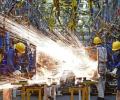
The country's manufacturing sector activity recorded another sharp deterioration in business conditions during May as new orders placed with producers continued to fall after April's record contraction, leading firms to cut jobs at the quickest pace on record, a monthly survey said on Monday.

'Could the impending new crisis, vibe coding, similarly create not a disaster like what befell Indian handlooms during the Industrial Revolution but another opportunity like what the Y2K crisis created?' asks Ajit Balakrishnan.

Passenger vehicle dispatches in India from factories to dealers rose to record levels at over 43 lakh units in FY25, with utility vehicles accounting for 65 per cent of the total sales in the segment, industry body SIAM said on Tuesday. Passenger vehicle (PV) dispatches rose to 43,01,848 units in the last fiscal year, marking a 2 per cent increase compared to 42,18,750 units in FY 2023-24.
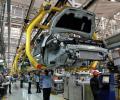
Auto parts exports from India may see a slight slowdown as US President Donald Trump's 25 per cent tariff could increase car prices for buyers by 8-25 per cent, thereby affecting demand, experts believe.

Post-election capital expenditure (capex) has been weak at 2 per cent year-on-year (Y-o-Y) in M9FY25. The FY25 revised estimates (RE) indicate 7 per cent growth in FY25 against FY24, implying 21 per cent Y-o-Y growth in Q4FY25 government capex.

From the Sensex pack, IndusInd Bank dropped over 3.50 per cent, followed by Mahindra & Mahindra which declined more than 2 per cent. HCL Tech, Maruti, Infosys, Zomato, Power Grid, Adani Ports, Tata Consultancy Services and UltraTech Cement were also among the laggards. Kotak Mahindra Bank, Hindustan Unilever, ICICI Bank, Tata Motors, Nestle and Bharti Airtel were among the gainers.

After Chennai, it is Coimbatore, Madurai, and Tiruchirappalli, that are emerging as manufacturing hubs. Coimbatore is India's top Tier-II city in terms of the number of GCCs, according to a report by Cushman & Wakefield.

Nayagam PP, a certified career counsellor and the founder of EduJob360, lists the top and emerging career streams in engineering.

India's economic growth forecast for 2025 has been revised downward to 6.3 per cent, and despite a projected moderation, the country remains one of the fastest-growing large economies, supported by resilient consumption and government spending, the United Nations has said.

The sudden stop in economic activity led to a sharp decline in employment-intensive sectors like construction, manufacturing and trade, hotels, transport etc.

Taiwan's Foxconn signed a letter of intent (LoI) with the Tamil Nadu government on Monday to establish a new mobile component manufacturing facility for Rs 1,600 crore in Kancheepuram with potential to generate 6,000 jobs. On his Twitter handle, Chief Minister M K Stalin said the LoI was signed, in his presence, between the state government and Foxconn Group represented by its chairman Young Liu. State Industries Minister T R B Rajaa, Chief Secretary Shiv Das Meena and senior officials participated.
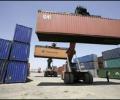
The index has remained above the 50-mark, below which it indicates contraction, for more than three years now.

There remains a debate on who said this: "When the facts change, I change my mind. What do you do, Sir?" Was it the British economist John Maynard Keynes or the American economist Paul Samuelson. Irrespective of who said it, this sentiment appears to have found resonance in ITC's boardroom in recent years.

The Nikkei India Manufacturing Purchasing Managers Index (PMI), fell from 52.1 in February to a five-month low of 51.0 in March, indicating the slowest improvement in operating conditions recorded by the survey since last October.
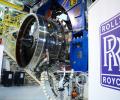
Aerospace major Rolls-Royce has announced its intention to double its supply chain sourcing from India over the next five years. The company plans to increase sourcing of complex parts for advanced aerospace engines, naval propulsion systems, diesel engines, and gas turbine engines to grow its presence and participation in India's defense sector. Rolls-Royce currently sources a wide range of high-precision parts and engine components from Indian partners for its civil aerospace, defense, and power systems businesses. The company highlights India's emergence as a preferred global sourcing hub and emphasizes its commitment to strengthening partnerships with both existing and potential Indian suppliers to develop capabilities for manufacturing complex engine components locally for global markets. Rolls-Royce highlights its established ecosystem of strategic partnerships, skilled talent, engineering and digital capabilities, service delivery, supply chain, and manufacturing in India, along with a history of successful technology transfer for licensed production of various engines in the defense domain. The company believes that strengthening the supply chain and enhancing ecosystem capabilities will pave the way for future co-production opportunities, supporting India's vision of becoming a self-reliant defense powerhouse. Rolls-Royce emphasizes its commitment to serving the needs of India's armed forces and its focus on participating in co-development opportunities for critical combat engine technologies.

Amid the ongoing global tariff war, Commerce and Industry Minister Piyush Goyal on Wednesday asked exporters not to panic and assured them that India is working on the "right mix and right balance" in its proposed trade agreement with the US.

India's services sector witnessed one of the strongest growth rates in over 13-and-a-half years in March on the back of strong demand that spurred sales and business activity, a monthly survey said on Thursday. The seasonally adjusted HSBC India Services Business Activity Index rose from 60.6 in February to 61.2 in March, one of the strongest expansions in total sales and business activity in close to 14 years. In the Purchasing Managers' Index (PMI) parlance, a print above 50 means expansion, while a score below 50 denotes contraction.

Global capability centres (GCCs) remained one of the major drivers of this huge spurt in demand for office spaces.

'The size of the investments is important, but equally crucial is the number of jobs that these proposals create.'
